+8615061447755


ITrong xây dựng các trang trại năng lượng mặt trời quy mô lớn, địa điểm dự án thường phải đối mặt với điều kiện địa chất phức tạp, đặc biệt là... các lớp đá hoặc đất cứngTrong những trường hợp như vậy, việc đóng cọc thép trực tiếp xuống đất có thể gặp nhiều khó khăn: cọc có thể không xuyên qua được, hiệu quả thi công giảm sút và thiết bị có thể bị hư hỏng.

Để đảm bảo quá trình thi công diễn ra suôn sẻ, nhiều dự án sử dụng Khoan trước DTH (Down-the-Hole) để chuẩn bị một nền tảng vững chắc cho lắp đặt cọc năng lượng mặt trời.
Bài viết này giải thích:
Tại sao cần hệ thống truyền hình vệ tinh trực tiếp (DTH) ở những khu vực nhiều đá?
DTH là gì?
Quá trình chuẩn bị khoan giếng DTH được thực hiện như thế nào?
Lợi ích của việc sử dụng DTH là gì?
Việc đóng cọc trực tiếp vào đất đá hoặc đất cứng có thể gặp phải một số thách thức:
Cọc không thể xuyên qua: các lớp đá có sức cản rất lớn, khiến cho việc đóng cọc trở nên khó khăn. đóng cọc truyền thống khó.
Hiệu quả thi công thấp: việc phải làm đi làm lại nhiều lần gây lãng phí thời gian và tăng chi phí.
Mức độ hao mòn thiết bị cao: va đập liên tục vào đá cứng có thể làm hỏng máy đóng cọc.
Móng cọc không ổn định: cọc có thể bị cong hoặc nghiêng, ảnh hưởng đến độ chính xác của cấu trúc giá đỡ tấm pin mặt trời.
Do đó, trên nền đất đá, Khoan sơ bộ bằng phương pháp DTH Đây là phương pháp tiêu chuẩn để đảm bảo việc lắp đặt cọc ổn định.
Khoan DTH (xuống giếng) là một kỹ thuật trong đó Búa được đặt ngay dưới đáy lỗ..
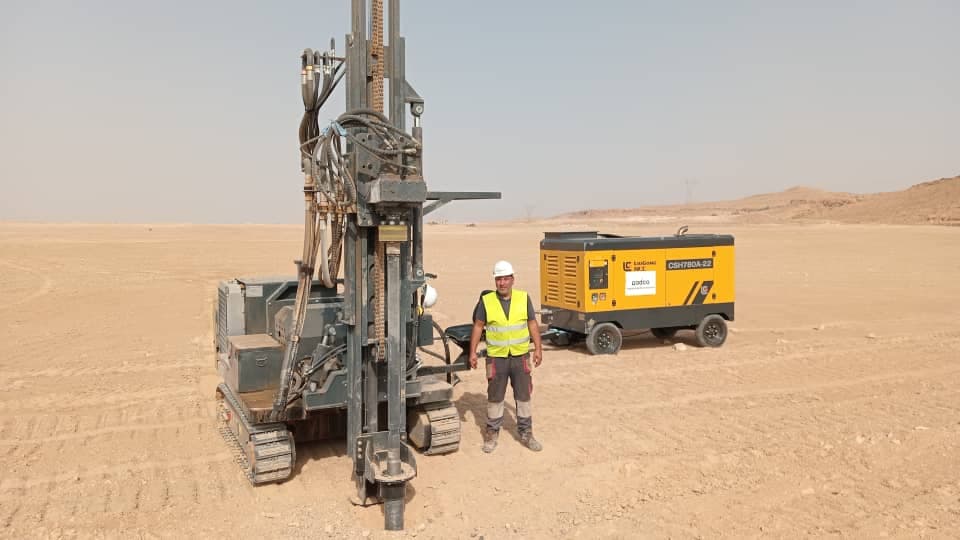
Các tính năng chính:
Truyền năng lượng trực tiếp đến mũi khoan, mang lại hiệu quả khoan cao.
Thích hợp cho các lớp đá và đất cứng.
Có thể tích hợp với máy đóng cọc năng lượng mặt trời để kết hợp khoan và đóng cọc.
Một hệ thống truyền hình vệ tinh trực tiếp (DTH) điển hình bao gồm:
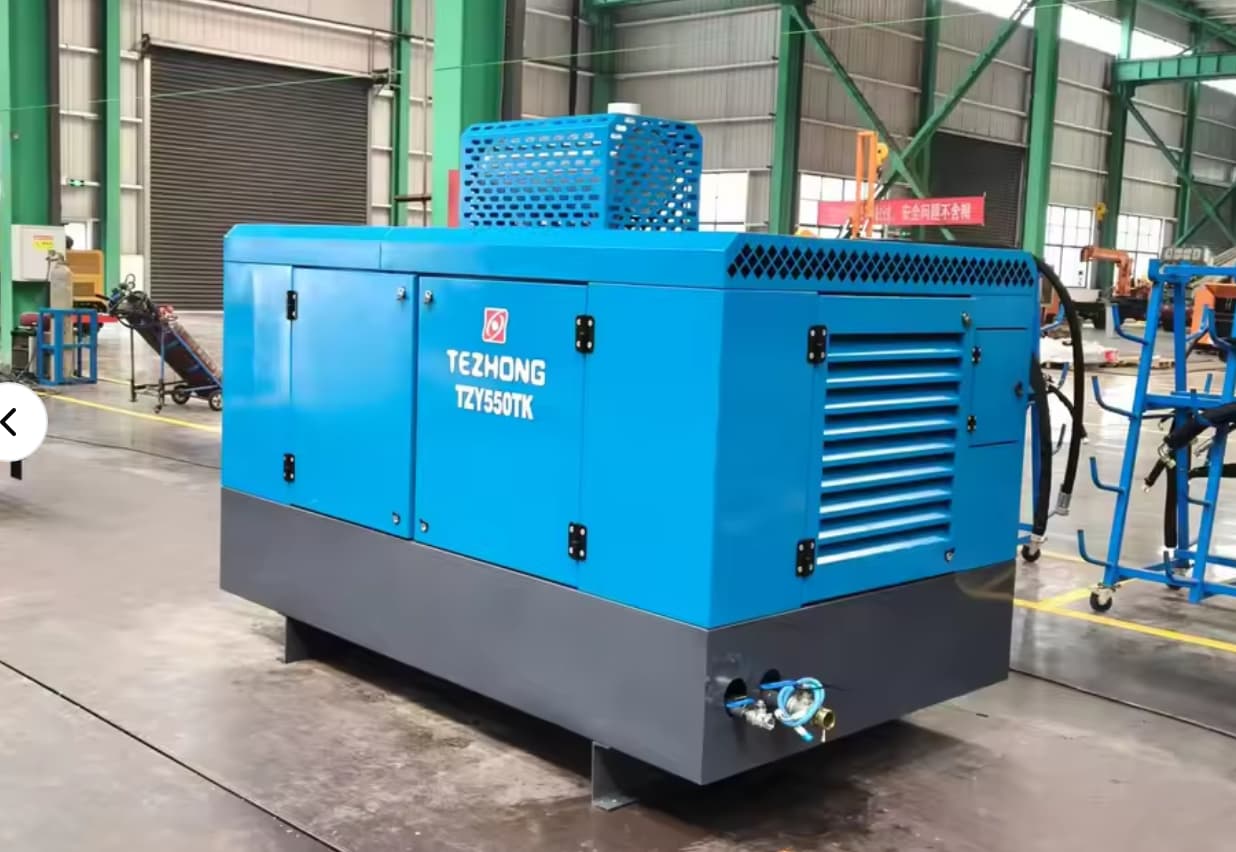
Máy nén khí cao áp
Búa khoan xuống lỗ (DTH Hammer)
Thanh khoan
Mũi khoan
Cấu trúc đỡ, thường được gắn trên máy đóng cọc năng lượng mặt trời hoặc giàn khoan.
Quy trình khoan thăm dò trước khi lắp đặt đường ống ngầm (DTH) trong các dự án năng lượng mặt trời thường bao gồm:
Bố trí mặt bằng: Đánh dấu vị trí của từng cọc theo thiết kế trang trại năng lượng mặt trời, đảm bảo thẳng hàng chính xác.
Khởi động hệ thống khí nén: Khí nén áp suất cao đẩy pít-tông trong búa DTH và thổi bay các mảnh đá vụn.
Khoan bằng lực va đập: Búa của máy khoan DTH nhanh chóng va đập vào mũi khoan trong khi cần khoan quay, phá vỡ đá một cách hiệu quả ("va đập + quay").
Loại bỏ mảnh vụn: Khí nén giúp giữ cho lỗ khoan luôn sạch sẽ, không bị tắc nghẽn do mảnh vụn.
Lắp đặt cọc năng lượng mặt trời: Sau khi khoan, các cọc thép được đặt vào hố bằng phương pháp rung hoặc ép thủy lực, có thể bơm vữa để tăng độ ổn định (nếu muốn).
Kiểm tra độ thẳng hàng và độ sâu của cọc: Đảm bảo độ thẳng đứng và độ sâu thiết kế đáp ứng các tiêu chuẩn của dự án.
Việc sử dụng phương pháp khoan thăm dò DTH ở các khu vực đá mang lại những lợi thế đáng kể:
Hiệu quả cao hơn: Khoan xuyên đá cứng nhanh chóng.
Giảm hao mòn thiết bị: Tránh tác động trực tiếp lên cọc và máy móc.
Độ chính xác của cọc được cải thiện: Cho phép kiểm soát chính xác độ sâu và độ thẳng đứng.
Khả năng thích ứng với địa hình phức tạp: Hiệu quả trên đá, đất cứng hoặc các lớp đất hỗn hợp.
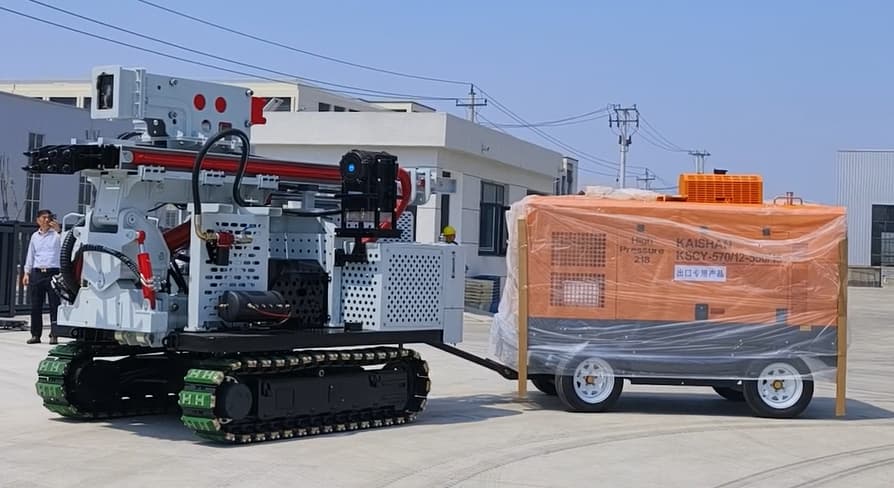
Khi kết hợp với khoan thăm dò DTH, Máy đóng cọc năng lượng mặt trời TZ Machinery Cung cấp một giải pháp lý tưởng:
Tích hợp liền mạch với khoan DTH để kết hợp khoan và lắp đặt cọc.
Kiểm soát chính xác độ thẳng đứng và độ sâu của cọc., đảm bảo độ chính xác khi lắp đặt tấm pin mặt trời
Hiệu suất và độ ổn định caoThích hợp cho nhiều loại địa hình đá và đất cứng.
Thiết kế đa chức năng, hỗ trợ khoan, đóng cọc và bảo trì.
Bằng cách kết hợp công nghệ DTH với thiết bị của TZ Machinery, các đội thi công có thể Lắp đặt cọc pin mặt trời một cách nhanh chóng, chính xác và hiệu quả.Ngay cả trên địa hình đá hiểm trở nhất, hệ thống này vẫn đảm bảo nền móng vững chắc cho các trang trại năng lượng mặt trời quy mô lớn.



+8615061447755
 Hỗ trợ mạng IPv6
Our hours
Dù là ngày lễ hay lễ hội, chúng tôi sẽ có người tiếp đón bạn 24/24 và phản hồi bạn trong thời gian sớm nhất.
Hi! Click one of our members below to chat on